AIT SGOUGOU N° 741ASG
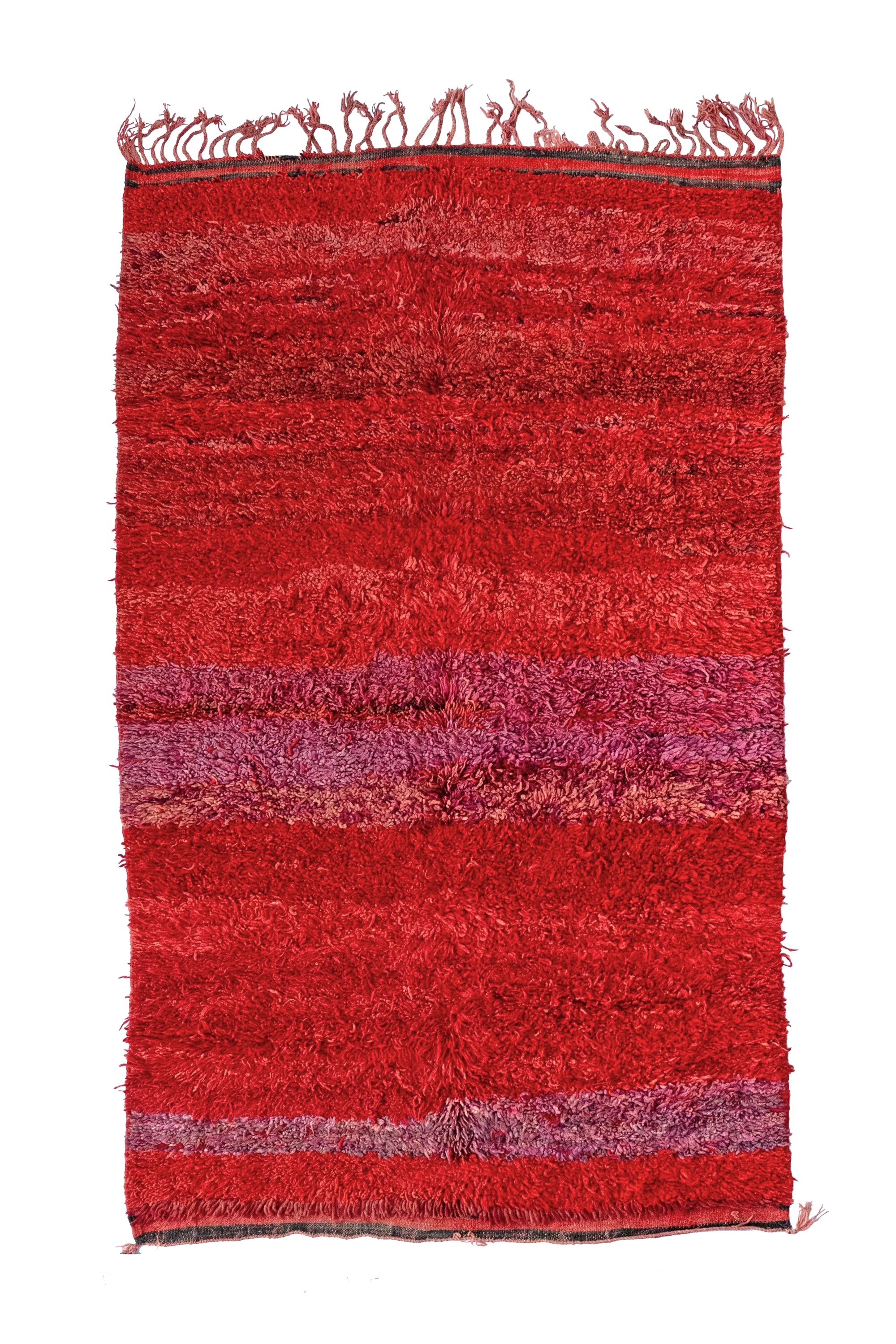
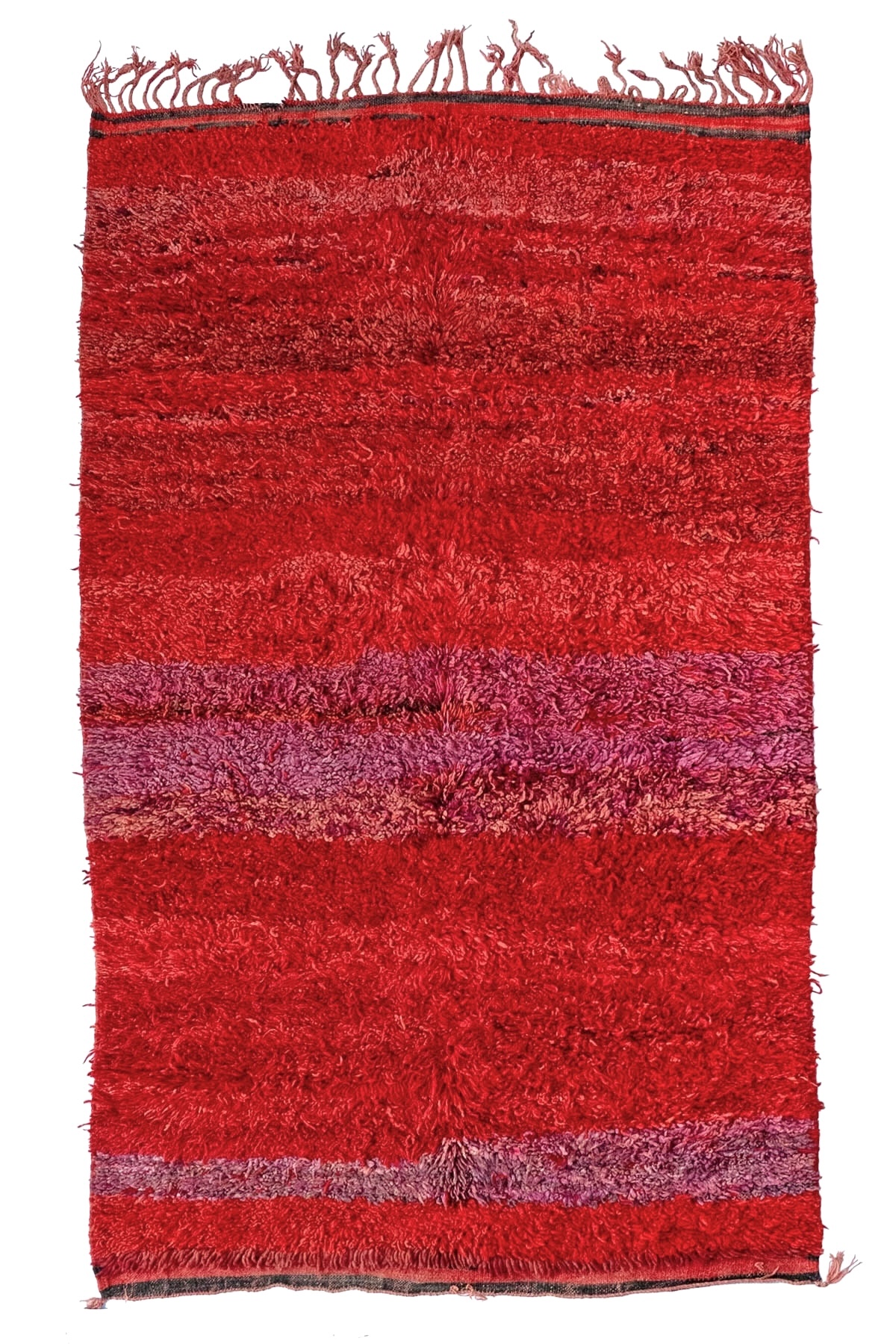
A remarkable Ait Sgougou rug, 1960s–70s, featuring a boldly colored monochromatic field and a lively, textured surface. The colors range from dark orange, violet, coral red, and burgundy to brown, with dynamic gradations within each hue. Its colored field possesses a chameleon-like quality, with the red tones appearing more orange or shifting toward a cooler, tomato-red depending on the light. What defines a monochrome rug is the weaver’s expression through color and texture; variations in dye batches and the weaver’s eye can produce markedly different results. This Ait Sgougou rug bursts with vibrant energy, yet retains a subtle, nuanced quality, making it an exceptionally strong example of its genre.
9'4" × 5'5"

The AIT SGOUGOU are a small tribe (divided into six subtribes) in the western Middle Atlas, bordering the Zemmour in the west, the Gerouan in the north, the Beni Mguild in the east and the Zayane in the south. Their tribal territory is long and narrow with the town of Oulmes in the northwest and Mrirt in the southeast. The women of the Ait Sgougou tribe were already making carpets as a source of income in the 1920s (noted by Prosper Ricard). Their pattern repertoire was sometimes influenced by the Zayan, but they were also known for the monochrome, mostly red and orange pile rugs with an abrash in the open field. The warp is usually made of red wool, sometimes black and more rarely dark blue warp threads. In the early 1990s, the monochromatic red carpets with striking color variation were produced in large quantities due to high demand on the market. Ait Sgougou rugs were also searched after for their minimalist abstract compositions, which were produced in small quantities for personal use.