AZILAL N° 554AZ
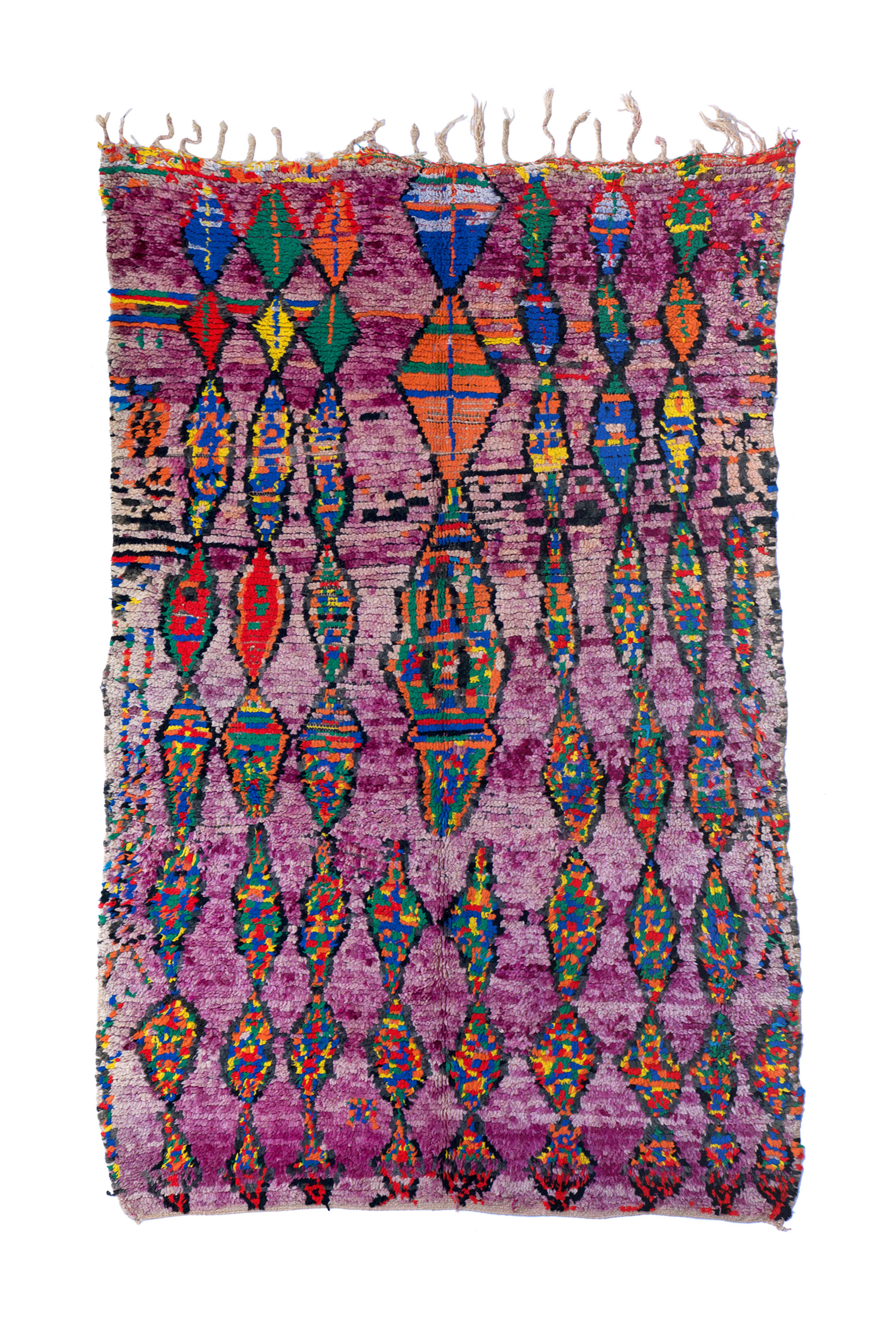
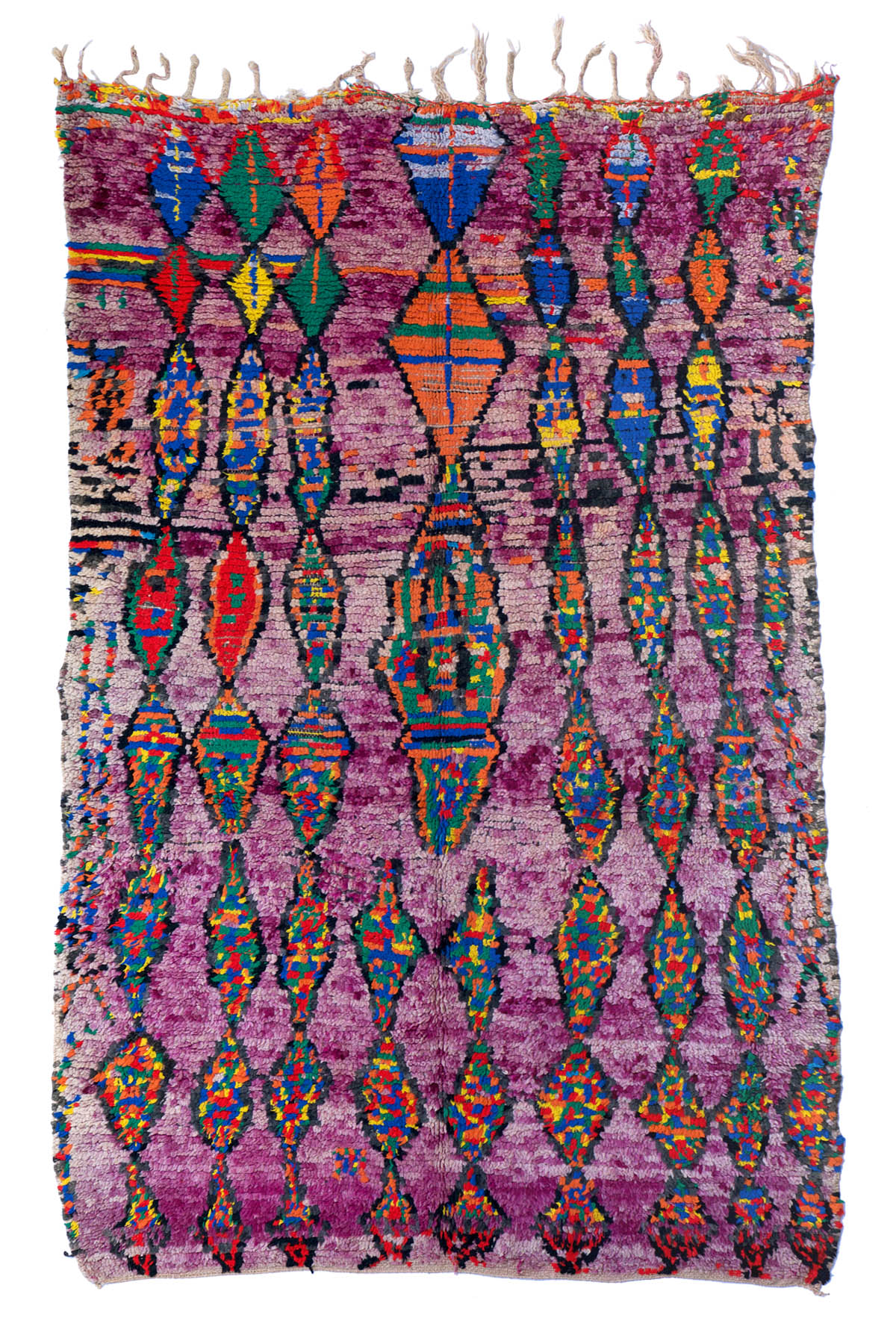
A vibrantly patterned knotted rug, 1990s–00s, most likely from the Ait Bouzid or the Ait Soukhmane, who are settled in the border area of the Azilal province and the so-called Boujad region, in the western foothills of the High Atlas near the Bin El Ouidane reservoir. Its eccentric design features vertically running chains of lozenges in various shapes and sizes, each filled with geometric motifs ranging from pixelated areas and fine lines to single dots and crosses. While the composition seems overall geometrically organized, it has an underlying chaotic structure due to countless variations and spontaneous breaks in both pattern and color. Bold colors in the pattern contrast vividly against the faded purplish wool background, whose subtle tonal variations almost form a pattern of their own, showing a blurred, pixelated quality.
8'10" × 5'7"
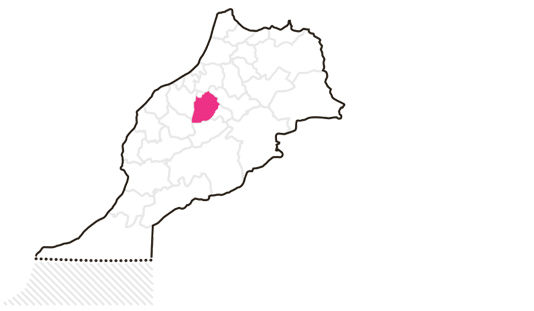
BOUJAD rugs are made by Arab groups and Arabized Berber groups but they are named after the town of Boujad. The surrounding region of this town lies in the western foothills of the Middle Atlas adjoining the Zaer tribal territory in the extreme western corner, and the town Beni Mellal at the northernmost edge of Western High Atlas. The knotted rugs have typically a low pile and are often made with mixed materials such as wool, cotton, textile scraps and industrial yarns. Their designs are often highly individual containing Berber motifs, motifs found in Rabat rugs, distorted checkerboard fields and gestural abstract patterns- all in lively colors.