BENI OUARAIN N° BOMS
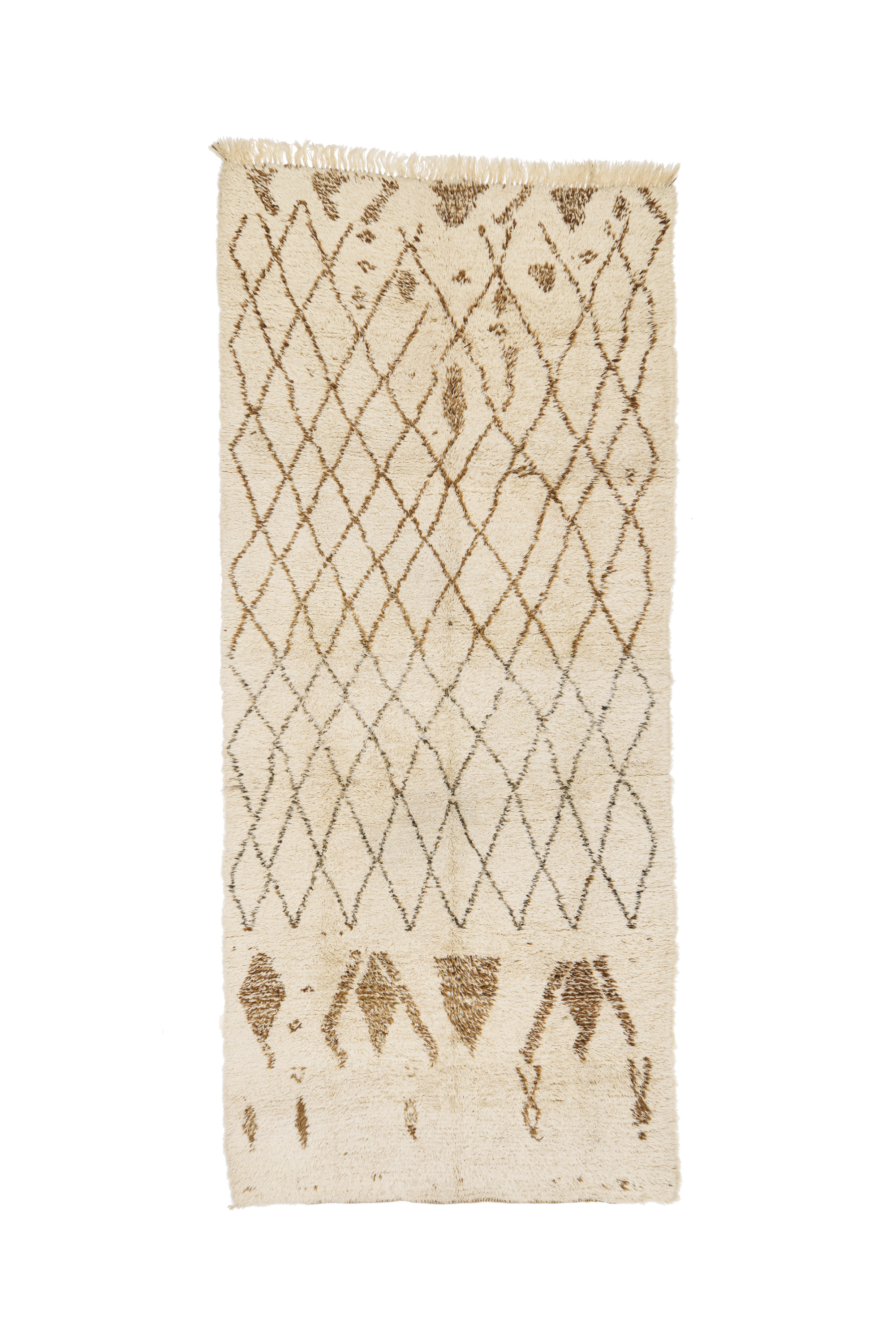
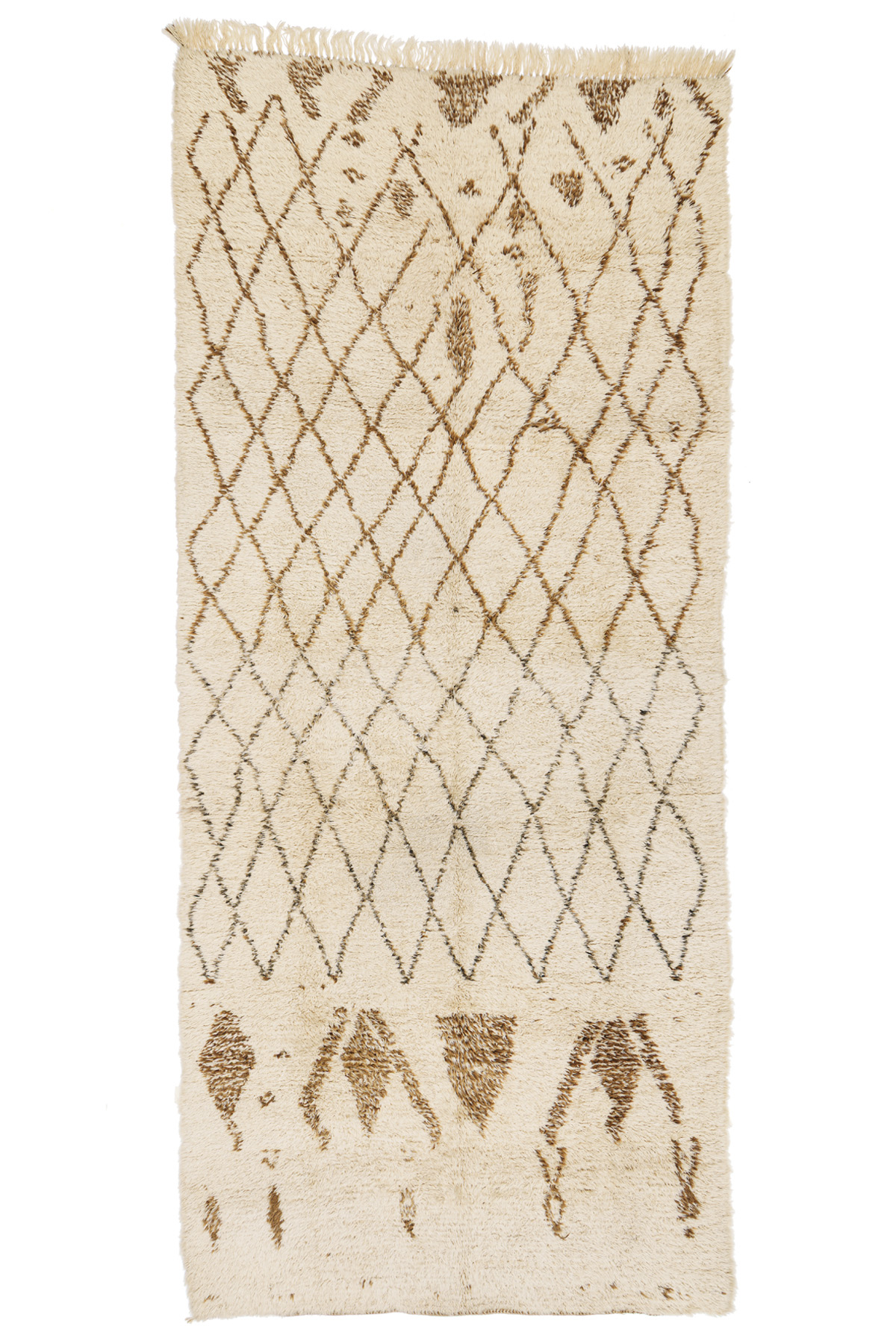
An exceptional Beni Ouarain rug with a high sheen in the wool, mid-20th century, in the typical elongated format, most likely made when the Beni Ouarain still lived nomadically in tents. Its composition begins with a very unique freehand drawing and then moves into a lozenge network interspersed with motifs that finish the overall pattern at the top edge. The structure is rather loosely knotted, resulting in a less voluptuous surface than tightly knotted carpets. The patina on the flatwoven side suggests that the rug was also used on the reverse, as many rugs in the Middle Atlas region were used this way in earlier times. The flatwoven side shows all the details and motifs in the overall composition. A high-resolution image of the reverse is available upon request.
The carpet comes from a Swiss collection and was originally purchased at Wohnbedarf AG in Switzerland. In the early 1930s, the art historian Sigfried Giedion, the architect Werner Max Moser, and the businessman Rudolf Graber set out to offer a new type of furniture that was in tune with the social upheaval of the time. From the very beginning, Wohnbedarf AG was closely associated with the development of new furniture and collaborated with many renowned architects. Moroccan carpets were added to the furniture collection, marking their debut in the European market.
13'7" × 5’9"
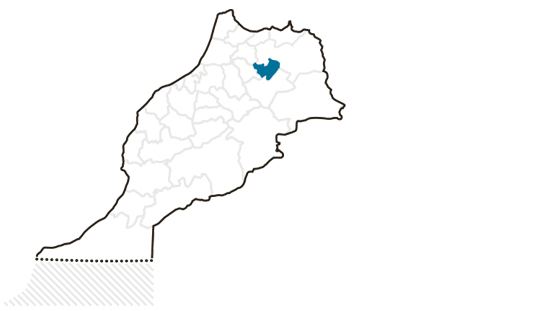
The tribal territory of the BENI OUARAIN includes most of the entire high mountain region of the northeastern part in the Middle Atlas. The Beni Ouarain are a confederation of seventeen tribes living in the area. Their territory is bordered by the Jebel Bou Iblane Range in the south and southeast and by the Jebel Tazekka in the north. The knotted rugs from the Beni Ouarain, originally made to use as beds, are known for their exceptional quality of wool, a high pile (up to 4 cm/ 1.57 in) and a classic lozenge pattern in dark brown or black on a white ground. Similar pile rugs with the same color scheme have also been made among other groups in some of the neighboring regions. The rugs of the Beni Alaham, Marmoucha and Ait Seghrouchène are often confused with the ones of the Beni Ouarain even if their patterns are quite particular.