AZILAL N° 485AZ
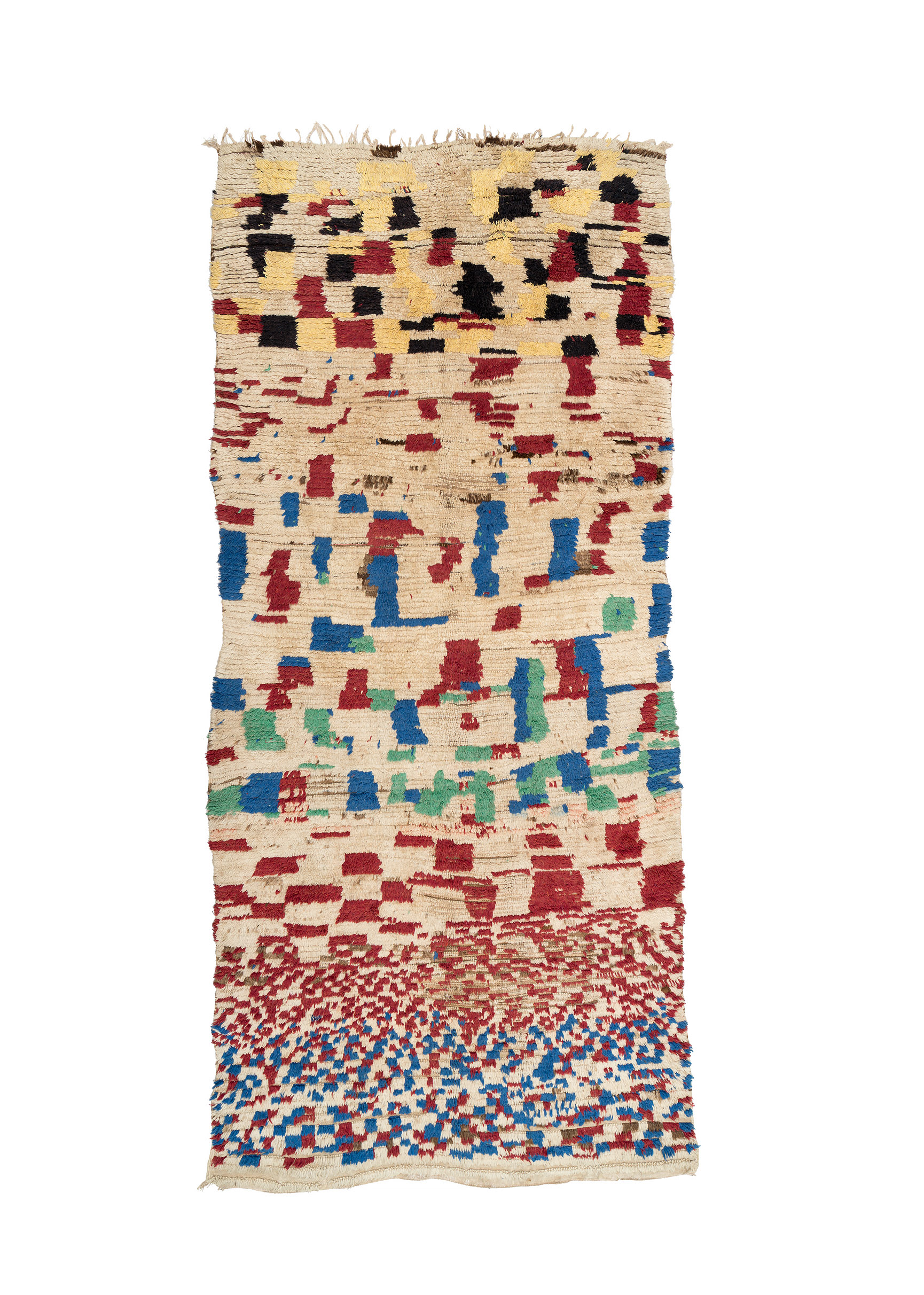
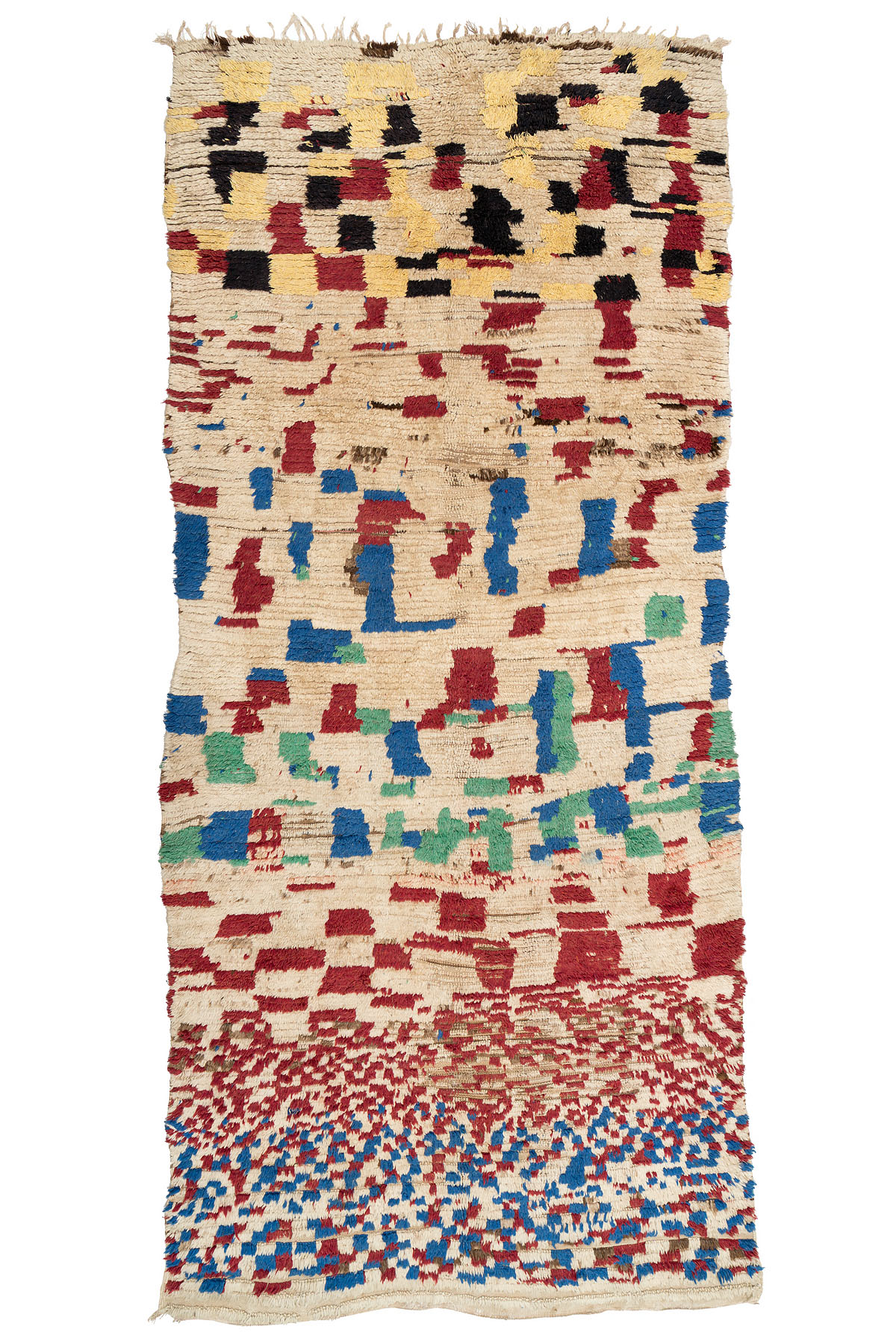
An archaic Azilal rug, circa 1980s, featuring a painterly composition that shows a free interpretation of a checkerboard pattern. Knotted of high quality wool from the region, it has a subtle handle that feels more like a blanket, which is typical for this type of rug. The reverse side incorporates a significant amount of dark brown wool in the weft, a detail indicative of an older piece. Rugs of this kind have unfortunately almost disappeared from the market but appear not to have been made in large numbers. Because of its delicate construction, it is better suited for a low-traffic area. Please note: the area with missing white pile in the pixelated section at the lower end can be restored.
Azilal rugs were discovered by the end of the 1990s, quickly awakening the interest of collectors, which means that rugs of this kind have unfortunately almost disappeared from the market. They also seem not to have been made or found in large numbers, due in part to their more delicate construction, but also because they were not documented before the 1990s. Soon after, a new generation of rugs was produced in larger quantities, often incorporating colorful industrial yarns and occasionally textile scraps.
10’5“ × 5’9“
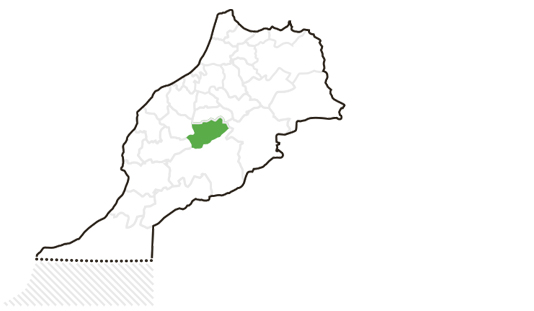
The attribution AZILAL is given to rugs that are made by Berber tribes living in the province Azilal. The province extends north of the main chain of the High Atlas to the southern foothills of the Middle Atlas. Most important tribal groups in the area are the Ait Atta Noumalou, Ait Bouguemez, Ait Shokhmane and Ait bou Oulli. Their expressive weavings were originally made with undyed wool and primarily found in the area around the Ait Bouguemez valley and among the Ait Boulli. The considered typical Azilal rug has a black or brown geometric design on a white background. Rugs with a red background come from the eastern part of the region, from the Ait Shokhmane and the Ait Bouzid, bordering the southern Boujad region. Most of the Azilal rugs one can find in today’s market were being produced between the 1980s until today. Their characteristics are slightly different incorporating colorful, industrial yarns and recycled textile scraps.